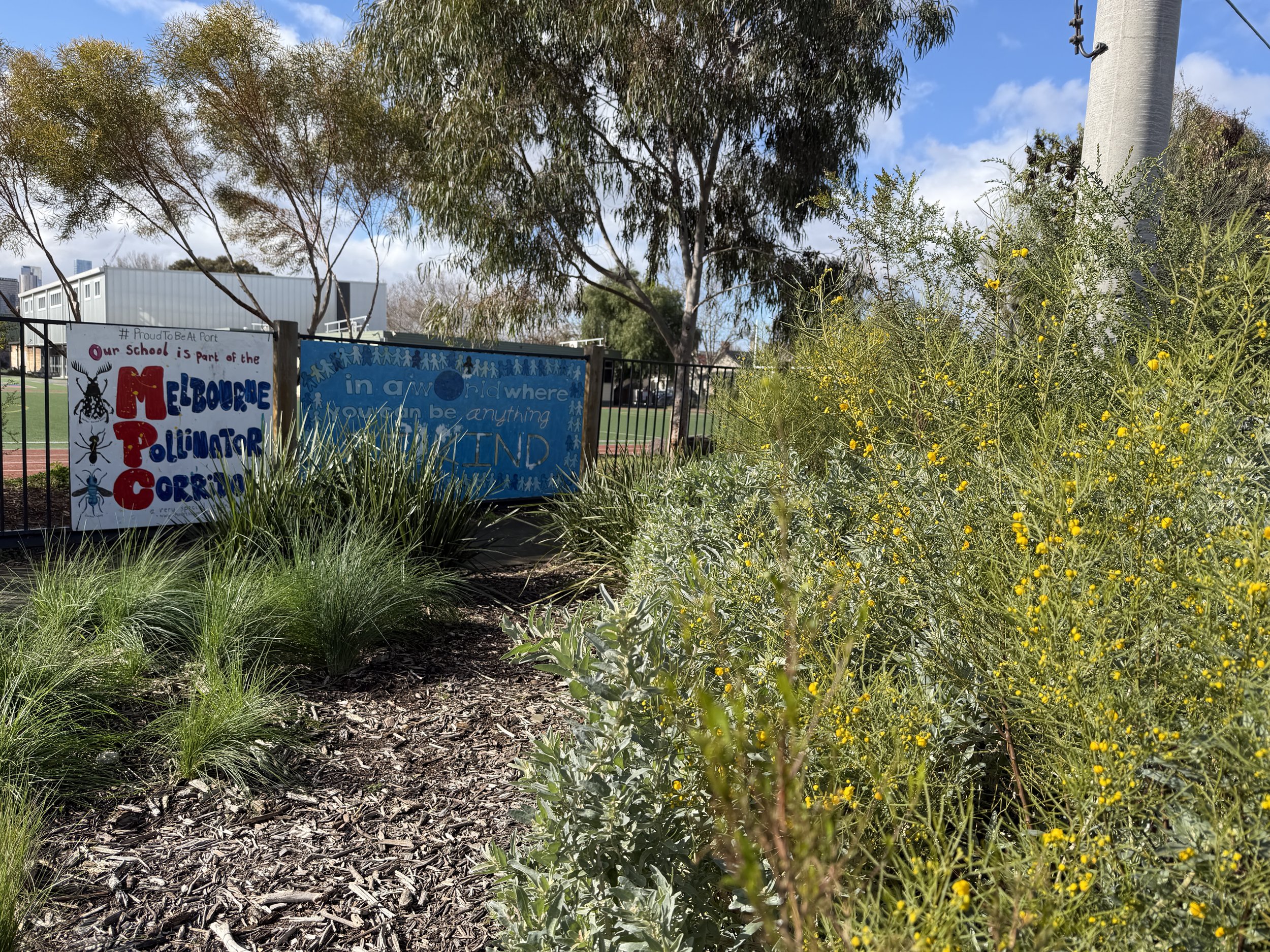
The Melbourne Pollinator Corridor connects 300,000 people to nature!
What is the Melbourne Pollinator Corridor?
The Melbourne Pollinator Corridor (MPC) is an Australian-first, innovative, inner-city wildlife corridor for native pollinating insects.
These include native bees, butterflies, moths, wasps, flies and many others. These critters, along with all of our insects, are absolutely crucial to our ecosystems, being the base of the food web. Plus they are absolutely gorgeous! However, they are declining rapidly, mainly because of habitat loss.
We can do so much to help our native pollinating insects - the solution is in ethical, thoughtful, caring connection.
Connection is what the Melbourne Pollinator Corridors is all about - connecting people to nature, to each other, connecting habitat to habitat and ultimately connecting people to themselves because we are nature.
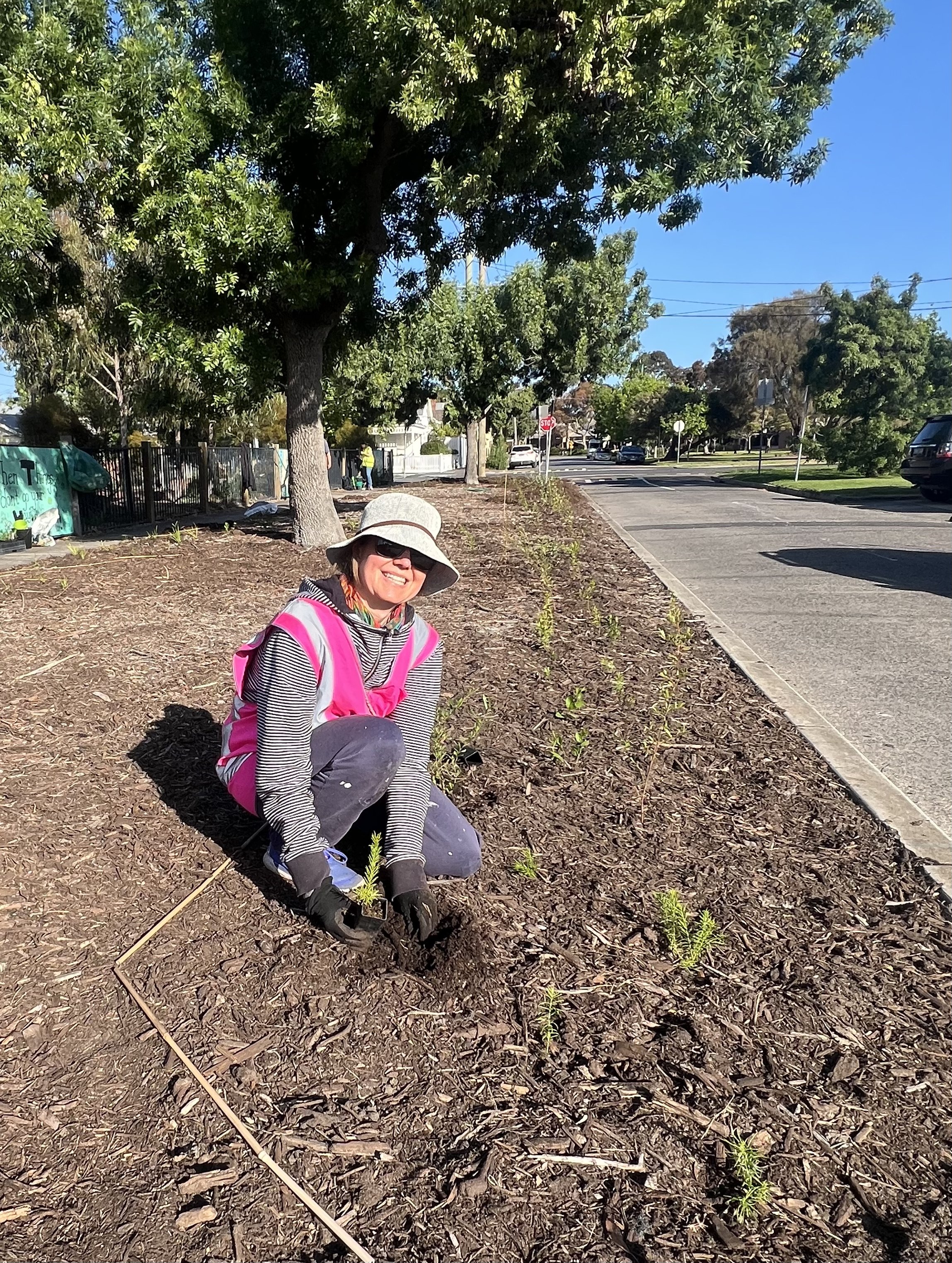
The MPC is community-driven, ecology-centred and nature-led, regenerating barren patches of public land, creating new systems around how public realm is designed, used and managed and educating and engaging communities around the importance of local ecosystems.
The MPC is a living, breathing example of how nature can be designed into cities strategically and ethically. This project is breaking down barriers in fields of expertise, land boundaries and land management systems, demonstrating the power of nature to create resilient communities not only of humans, but of fauna, flora and fungi.
The MPC is demonstrating the long-term, systemic change that is so urgently needed in public realm.

So far…
56 gardens created
blue banded bees at all major MPC sites over last two years
the MPC moves through 4 suburbs
2400% increase in insect species over 1 year at one site
13 butterfly species recorded
over 6 tennis courts worth of barren public land transformed


The Melbourne Pollinator Corridor is like an artery, pumping life out from and between Westgate Park and Royal Botanic Gardens, which act like the lungs of the city. The huge web of people involved are like fascia, connecting and strengthening communities of humans, fauna, flora and fungi.
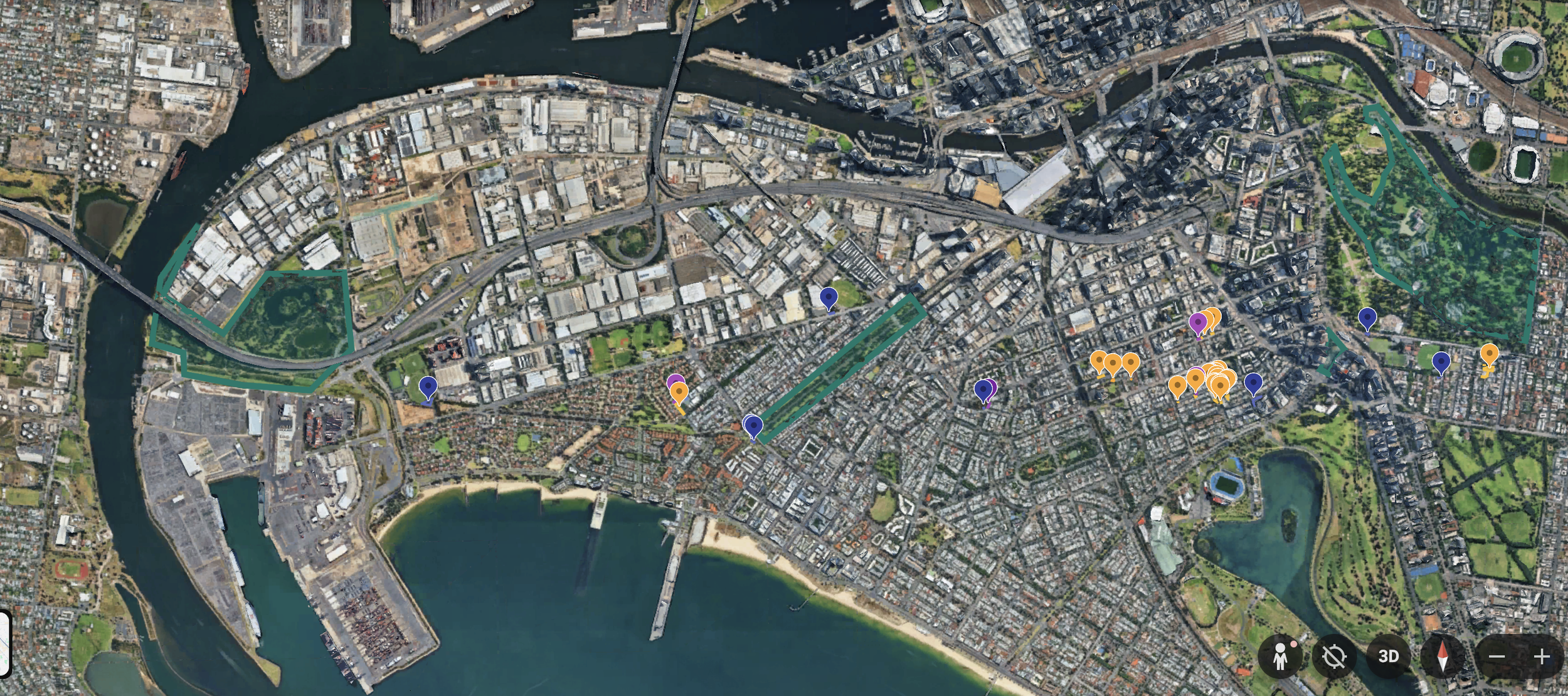
Above: a map of the Melbourne Pollinator Corridor - we are connecting Westgate Park (the green patch on the left) to Royal Botanic Gardens Melbourne (green patch on the right), with the lightrail linking in the middle. Orange dots are gardens managed by Heartscapes, blue dots are gardens managed by the community and purple dots are gardens in the works.
The aim…
The aim is 200 indigenous-focussed gardens connecting Westgate Park to Royal Botanic Gardens Melbourne, 2 large, biodiverse but isolated green patches. We will be needing 300+ volunteers to help care for the garden - volunteer here!
We aim to connect and increase populations of our fantastic and incredibly varied insects and help them move and flow through the urban matrix.


The Vision…
An urban hiking trail through the inner-city, like a grass-roots nature-led High Line.
A platform for Bunurong community to share Language and Knowledge.
A demonstration of inner-city biodiversity conservation, the final frontier of conservation.
A project that locals love, people visit and all Australians can be proud of and inspired by.
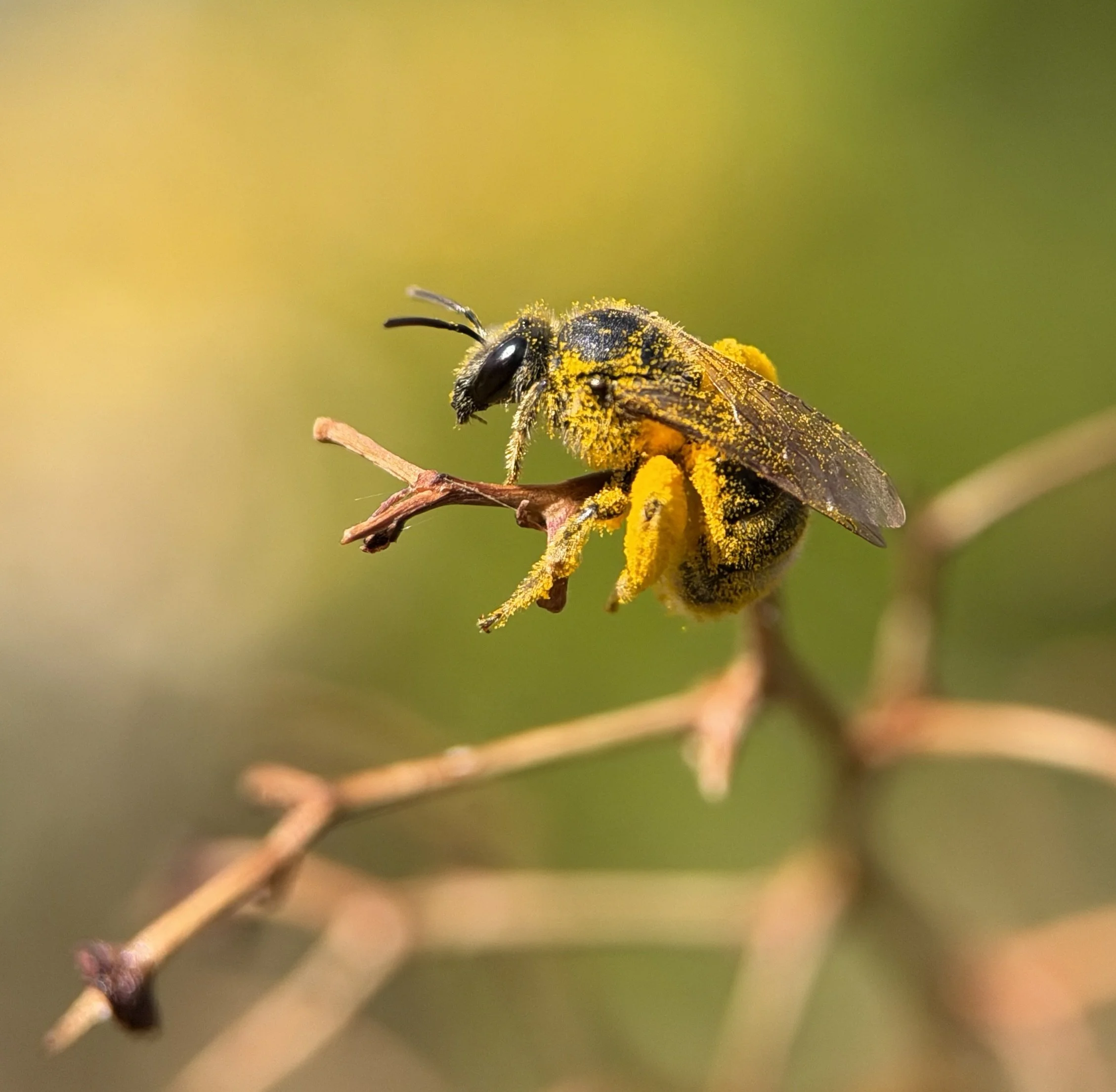
The design…
The Melbourne Pollinator Corridor was designed between 2020-2022 by Emma Cutting, while she was gaining experience creating many street gardens with the community.
The MPC builds on our care-centred street gardening approach with an interdisciplinary approach - local and international research was used - plus the input of over 30 scientists and specialists.
The MPC is designed to work within site constraints and the placement of gardens is flexible - they follow the path of least resistance (inspired by the Bruce Lee quote “Be water, my friend.”).
To maintain the interdisciplinary approach, many specialists and scientists remain involved. Learn more about the MPC Advisory Panel here.
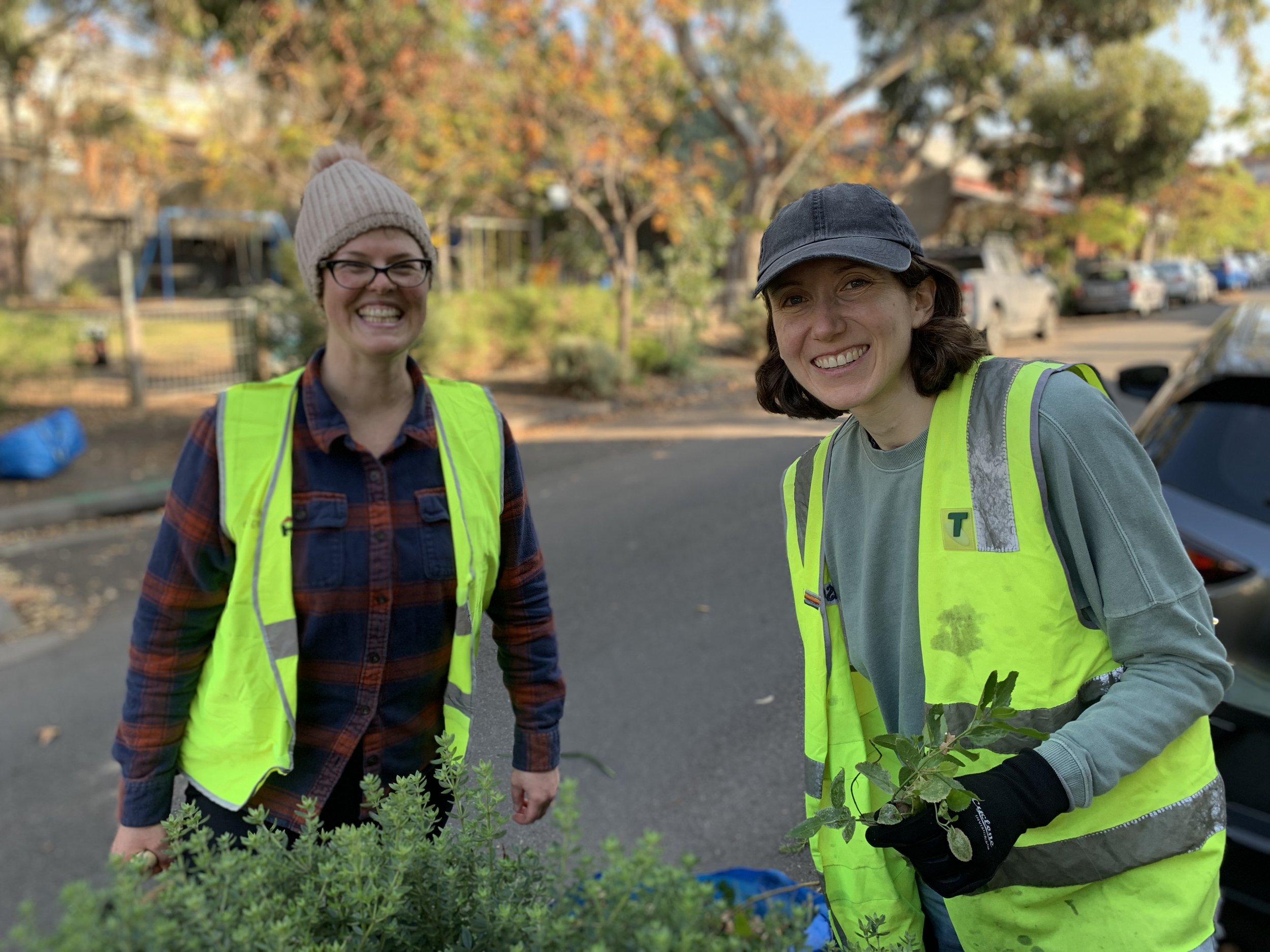
Diversity gives the MPC strength in all sorts of ways. Through working with many stakeholders - including residents, businesses, schools, kindergartens, local organisations, developers and public housing - we are continuing to expand a wonderful web of people that support the project in all sorts of ways.


What Experts are Saying…
“It has been remarkable to witness Heartscapes’ capacity to make positive impact as they restore nature in even the most constrained city spaces.”
- Dr Kylie Soanes, urban wildlife ecologist
“The Melbourne Pollinator Corridor is a working example of successful collaboration; bringing together a raft of expertise from the science community, filtering to the residents as citizen scientists and inspiring volunteer action.”
- Dr Meg Hirst, plant ecologist
“Whilst projects such as Melbourne Arts Precinct, or the City of Melbourne’s Greenline are the “show ponies” of this type of urban intervention, with the budgets to match, I believe it is projects such as the MPC that will really drive change.”
- Jon Hazelwood, landscape architect
“The Melbourne Pollinator Corridor is a ground-breaking and vitally important project on many levels.”
- Fiona Brockhoff, landscape designer
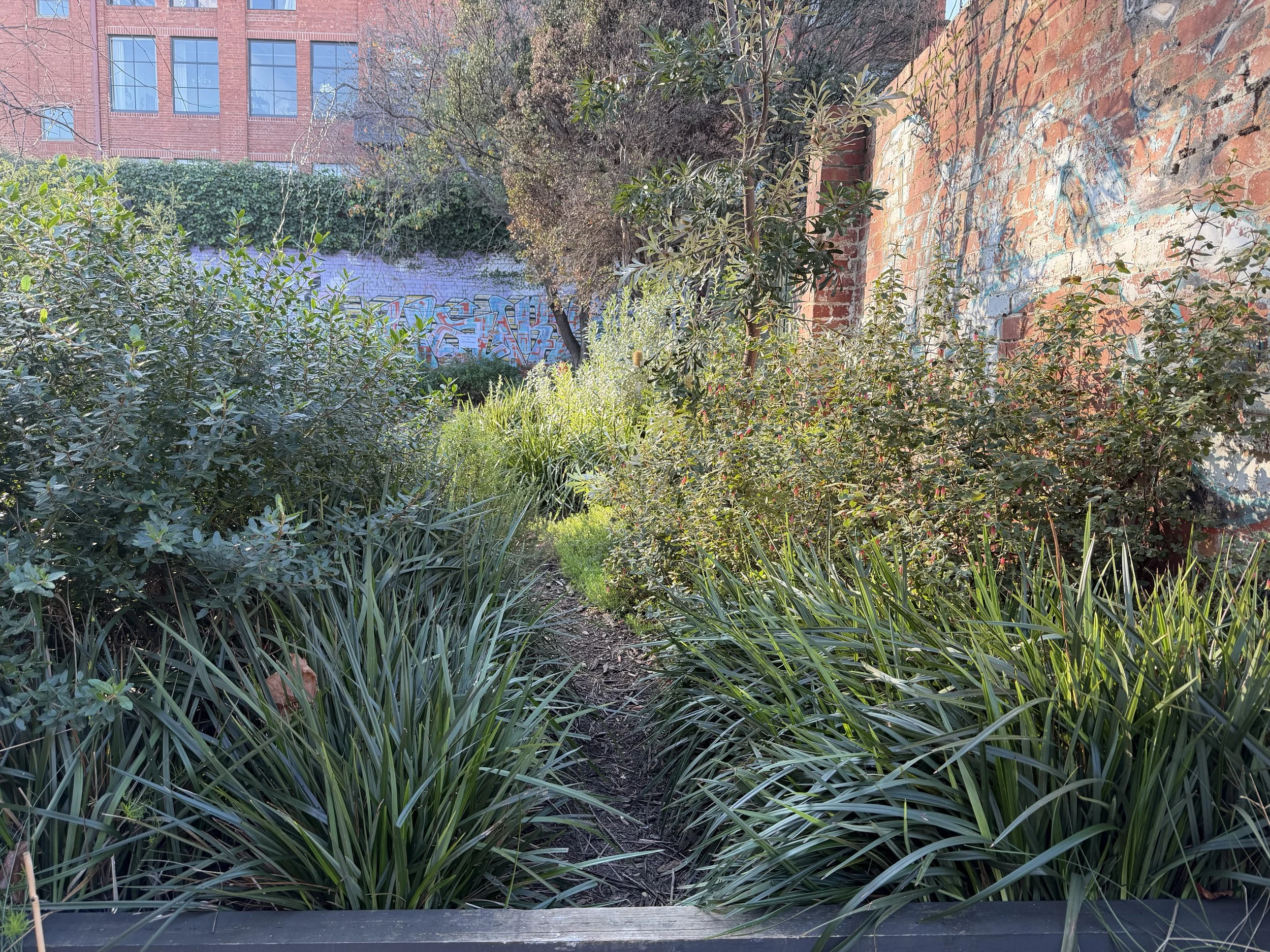
“The Melbourne Pollinator Corridor is a lovely long stretch of snacks to invite our most precious pollinators into our backyards and veggie patches.”
— Jenny Lyon, Green magazine
“The wildlife corridor spanning an area just south of Melbourne’s CBD demonstrates the role that open-ended design processes and the fostering of caring relationships with public landscapes can play in the empowerment of ecologies and communities.”
— Jen Lynch, Landscape Architecture Australia magazine