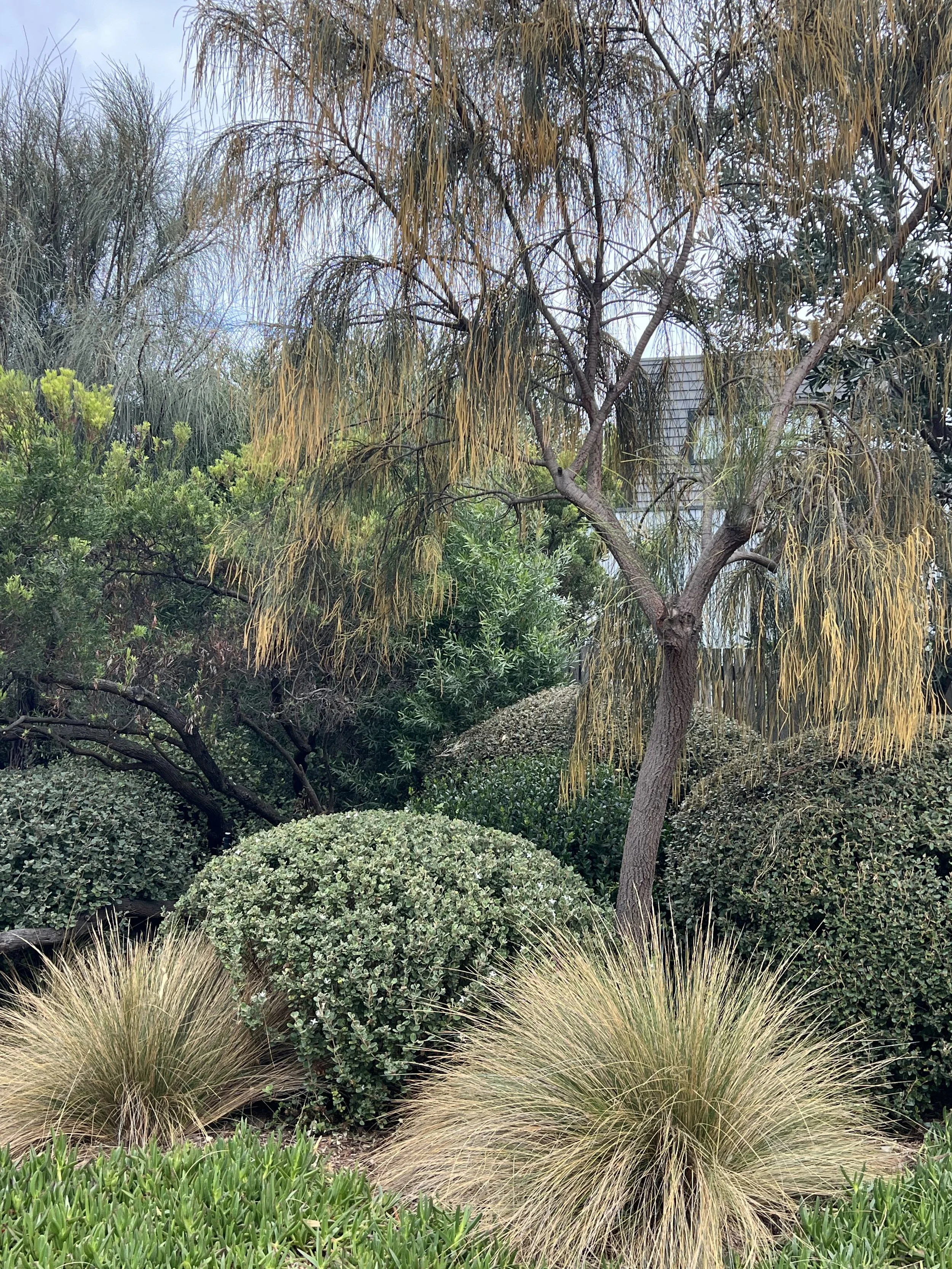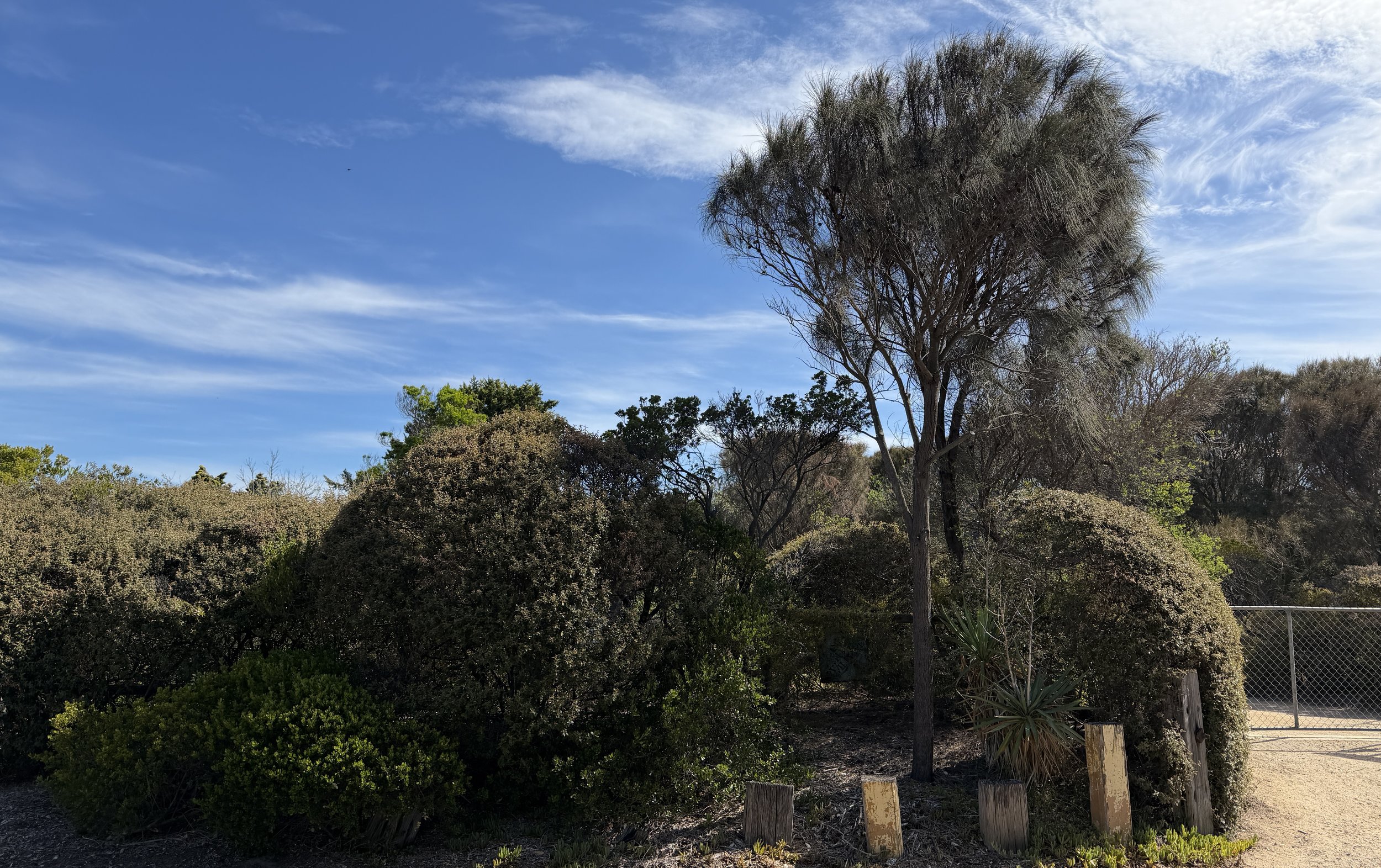
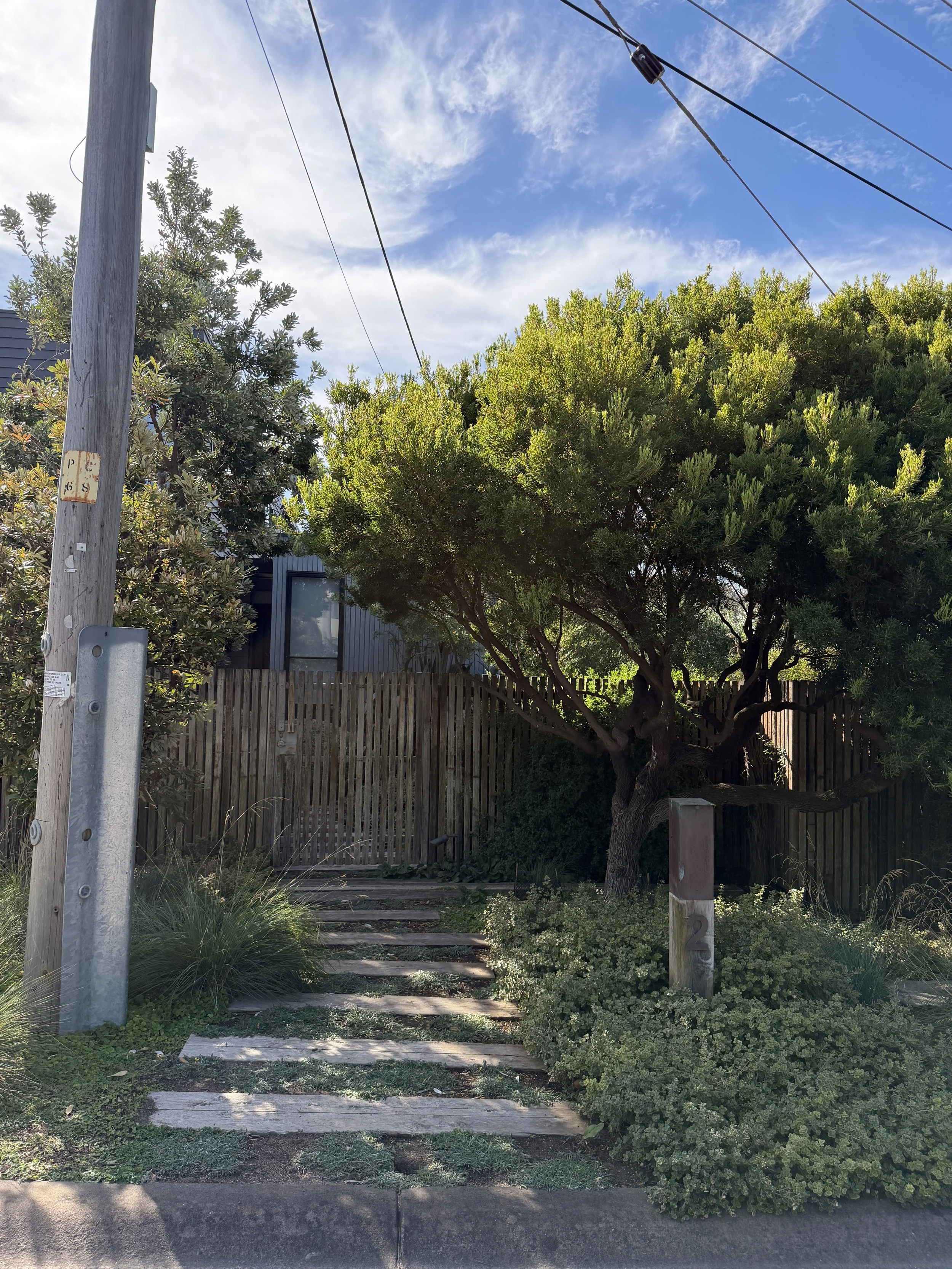
Entrance to Karkalla and large corner garden, Mornington Peninsula
Street Gardener: Fiona Brockhoff
Landscape designer and author of With Nature
Instagram: @brockstar64
Date of interview: 4th February 2026
Images: Fiona Brockhoff and Emma Cutting
Top 2 images and film: entrance to Karkalla.
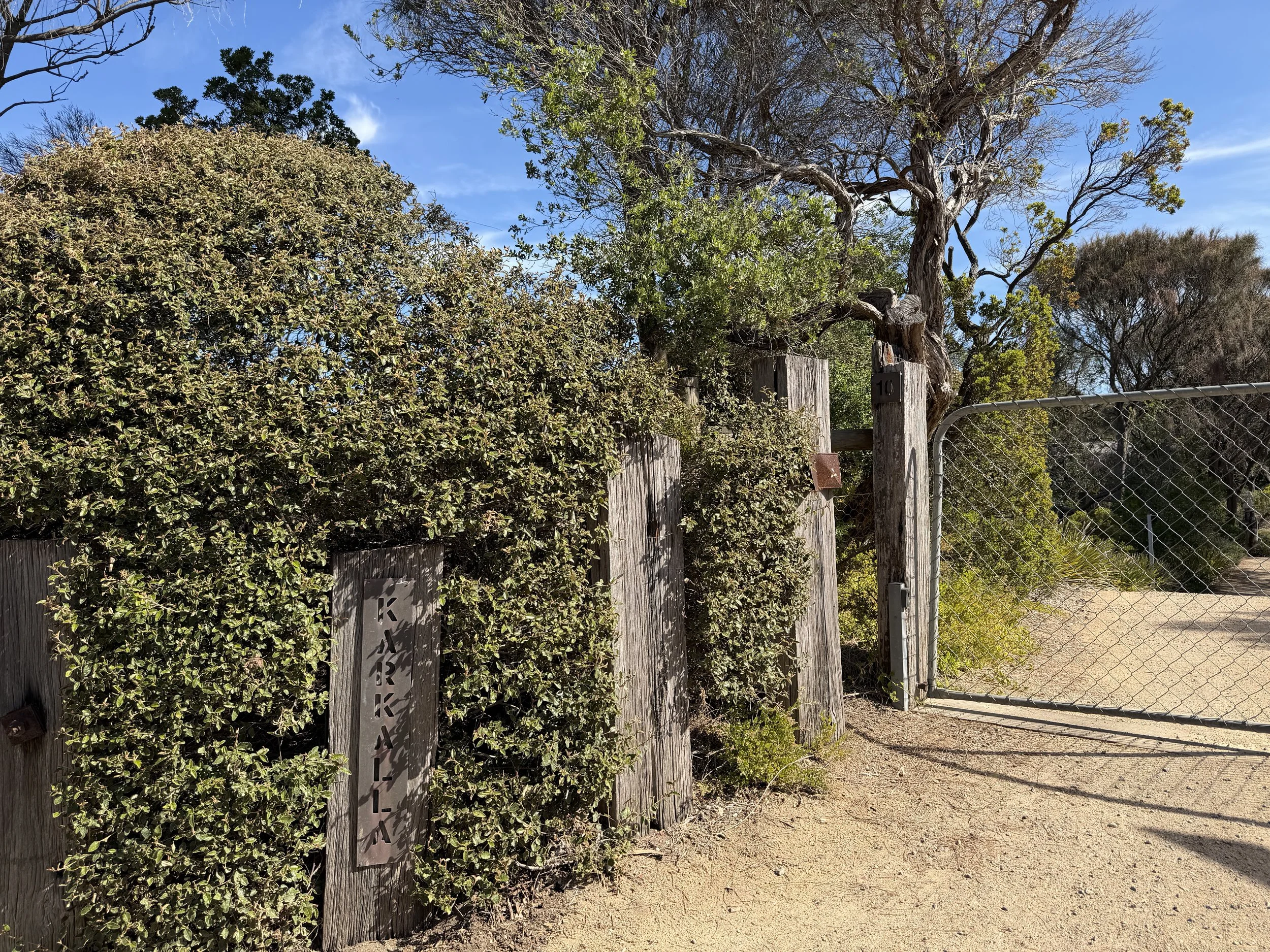
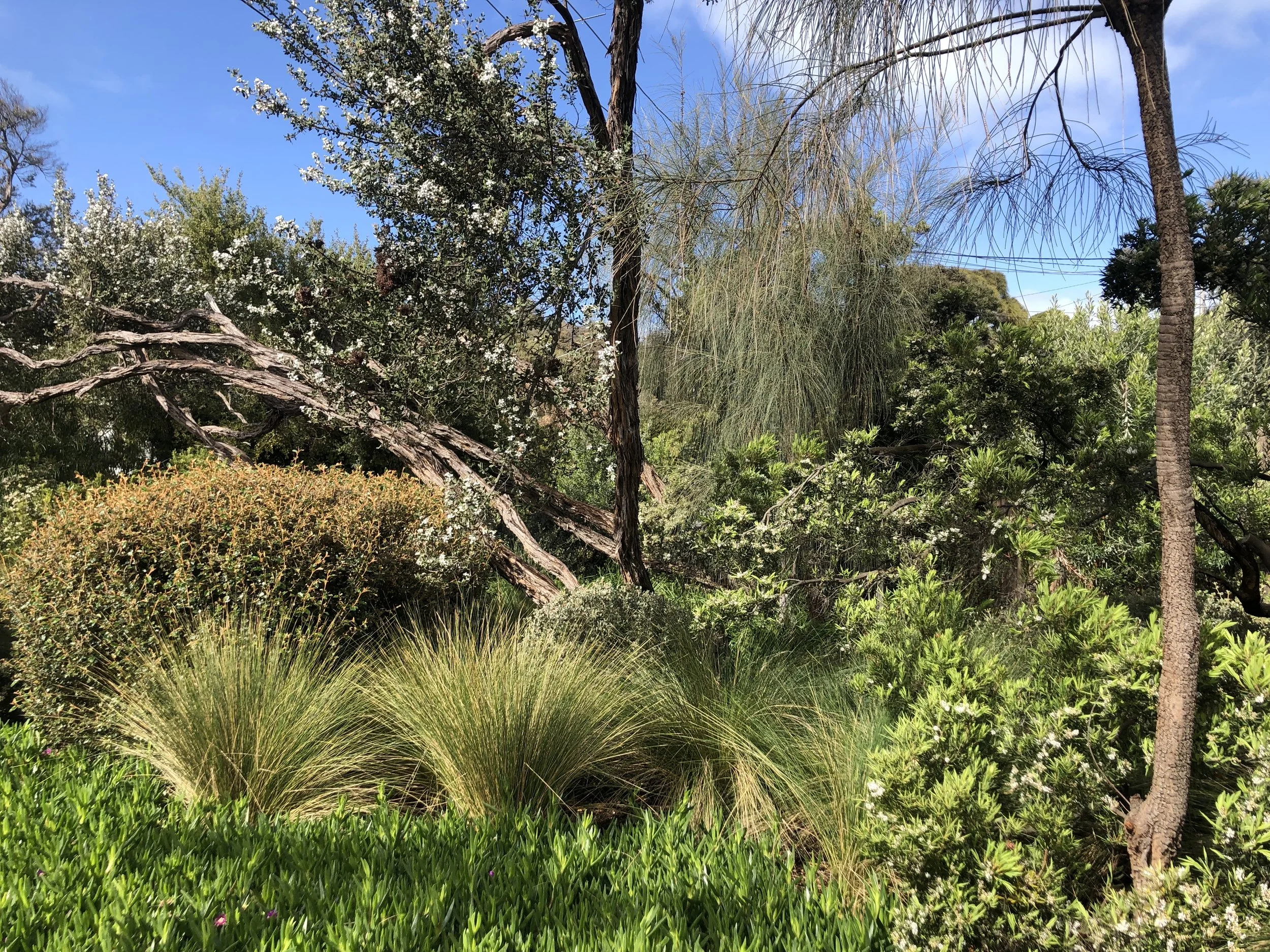
Rest of the images and film: This is a nearby nature strip designed by Fiona. The film gives an idea of the scale of the garden (it’s a big one!) and how it moves seamlessly into the private garden. It is 8 years old and maintained regularly by a gardener with trimming twice a year. The nature strip is on a corner and is 15m x 3.5m down one side and 40m x 3.5m down the other.
When did you start your street gardening journey?
We started planting on the nature strip 30 years ago.
We have also planted out many nature strips for clients over the years and for many reasons we like to have council permission. These sites give our clients more space for planting indigenous plants - for example, one neighbour had over half as much space again for planting. That garden is now 8 years old, established and managed by a gardener - it looks fabulous (see images). With another client, we are looking at transforming a 1/2 acre nature strip. One client put it in their brief that they wanted us put the nature back in the nature strip! It was a very successful project and was much loved by people and wildlife.
What do you think your community thinks about street gardens?
In our street it’s not really a topic of conservation. There is a fluidness between private to public - one thing flows into another - as there are no big fences and everyone uses the street as a footpath. In general, people here don’t consult council. And anyway, when people are planting their nature strips they are often doing good work for the council taking weeds out that cause ecological damage.
What do you think is the most important consideration when planting out a nature strip in a coastal area?
Appropriate plant selection. Plants that are site suitable, available and provide great habitat. Planting on this land is a way to give habitat back to areas where so much has been lost.
“It speaks the language that the rest of our garden speaks so when I see it I think “I’m home”.”
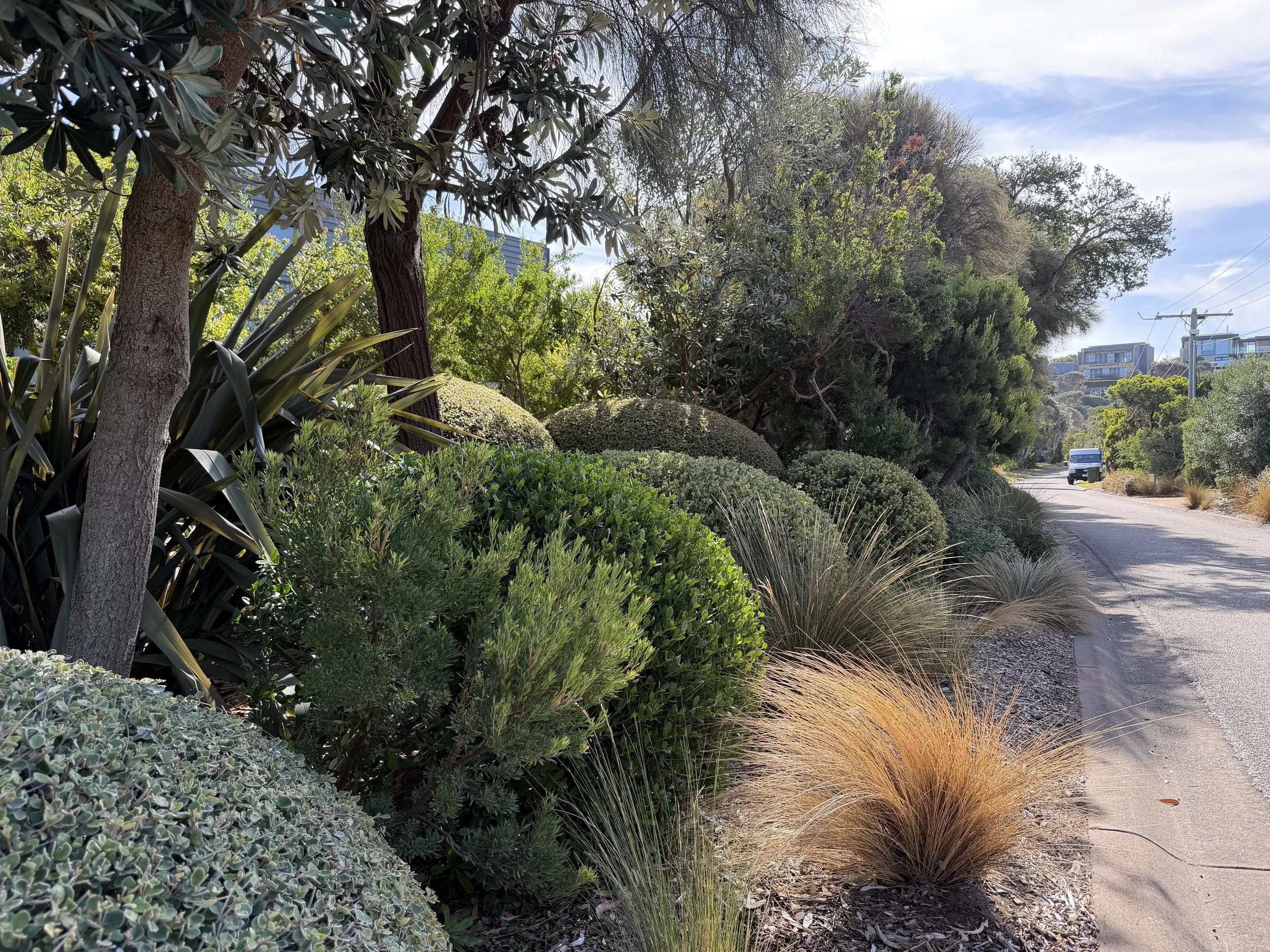
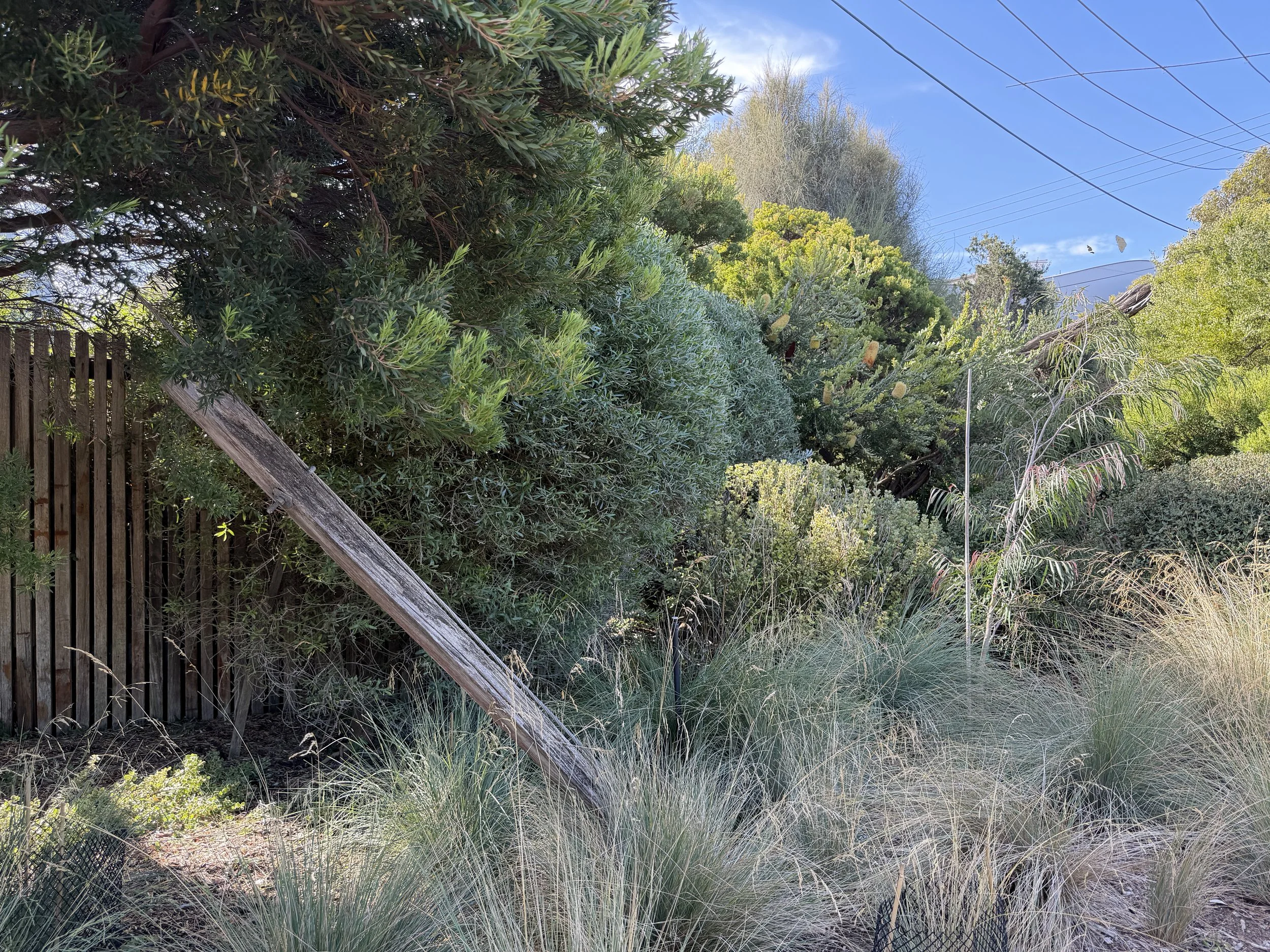
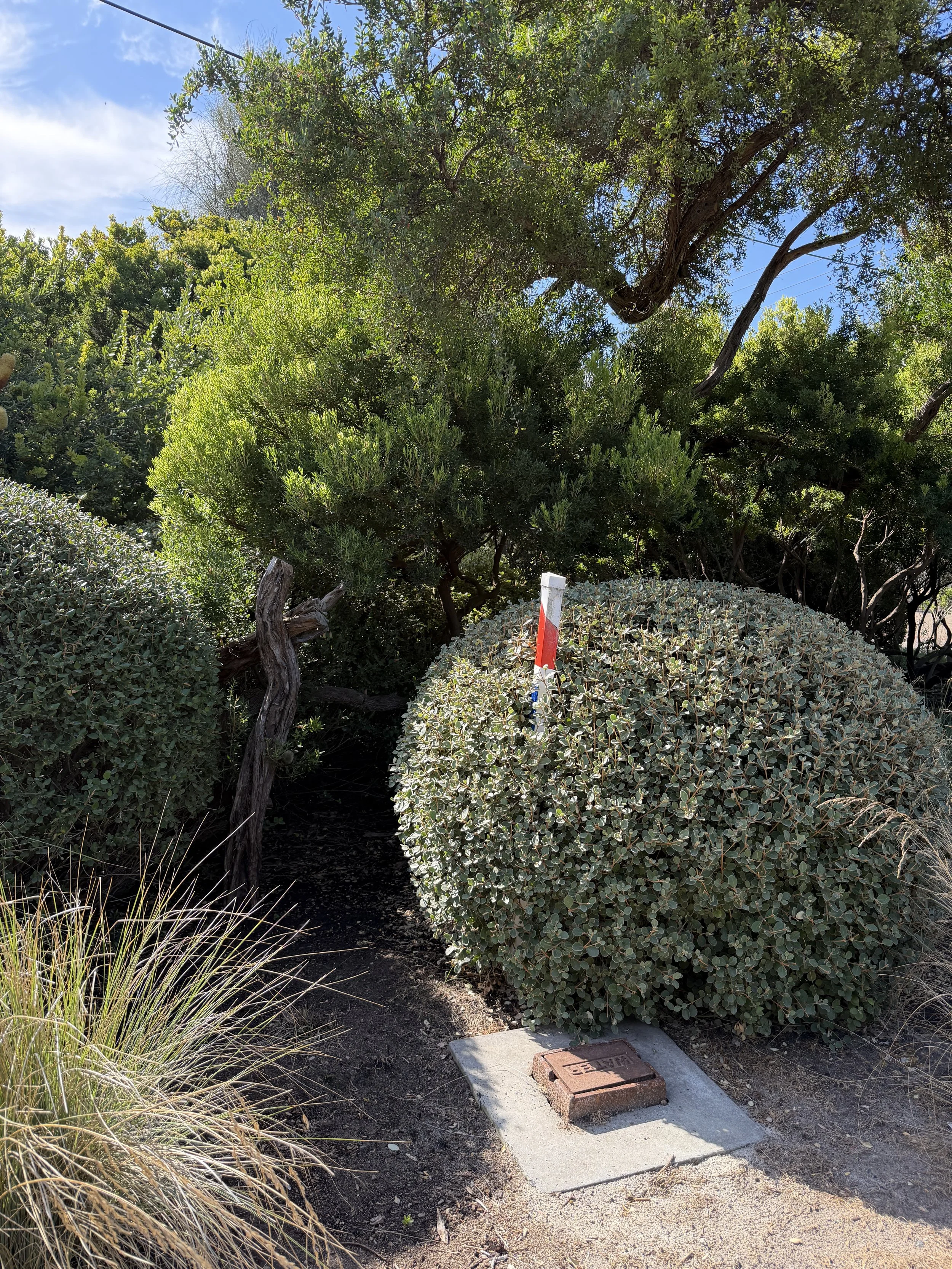
Above: The garden makes great use of space and even uses the utilities as features in the garden yet sill allowing them to be accessible.
Below: The garden is all indigenous plants except for the odd Callistemon. The site is close to Karkalla but not so high on the hill so more nutrients have been able to build up in the soil.
What are the challenges you face in your street garden?
The site can get damaged by cars, dogs and people. Damage can also come from drought if you are planting late in the season.
Being up high, we deal with a lot of wind and there is very little shelter. Soils are very sandy with very little accumulated nutrients in the ground.
Rabbits are also an issue - we use all different sorts of plant guards, often recycled from previous jobs. These guards help prevent rabbit predation and also stop vehicles running over them.
People going to the beach sometimes park their cars willy nilly on local nature strips which can cause a few issues - it can create genuine safety issues in bush fire season, rubbish trucks sometimes can’t get past the parked cars and the cars erode the land. To help solve this problem, we created off-street parking on our own block. Then, along with our neighbours, we put some bollards in making sure they were high enough to be visible by drivers and visible at night with reflectors. It has pretty much worked.
The last 3 images: These are the same garden but a few years earlier than above and after some rain - much greener!
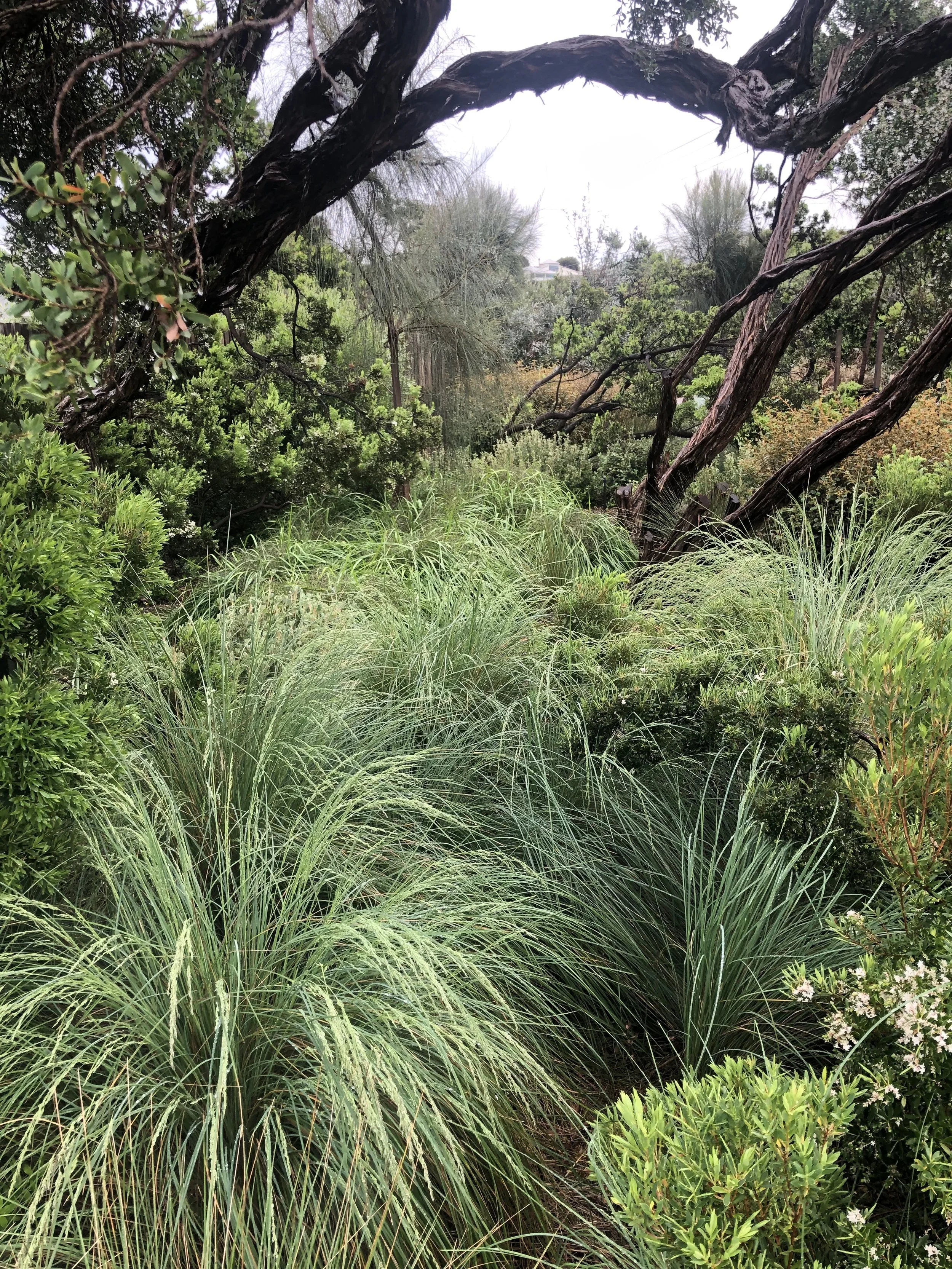
“Planting on this land is a way to give habitat back to areas where so much has been lost.”
Do you mulch?
Yes. We use a slightly heavier mulch so it doesn’t get displaced with the wind we get. We like fresh mulch from a local chipper which takes about 3 years to break down. To feed the soil, about once a year we scatter fertiliser (like dynamic lifter) on top of the mulch which gets gradually washed in.
As far as ongoing management, we do weed control and prune to keep it tidy and at a particular size to stay attractive longterm.
When do you think it is best to plant?
It is always better to plant with the autumn break to let them establish over winter and spring than to plant late in the season, especially if you get a hot summer with no one to look after things. Coastal plants grow a lot over winter - as we are close to the water, the peninsula isn’t quite as hot and cold as the city. We tend to plant small tubestock and 10cm pots so if there is a death it doesn’t matter so much. Also, water requirement and transplant shock is less for tubes.
What has your street garden given you?
It gives me great enjoyment. The garden beautifies the entrance to my home and adds to the street aesthetically. It speaks the language that the rest of our garden speaks so when I see it I think “I’m home”.