The Girls with Rocks in their Head…Woops! In their Garden!
Street Gardener: Ann James and Ann Haddon
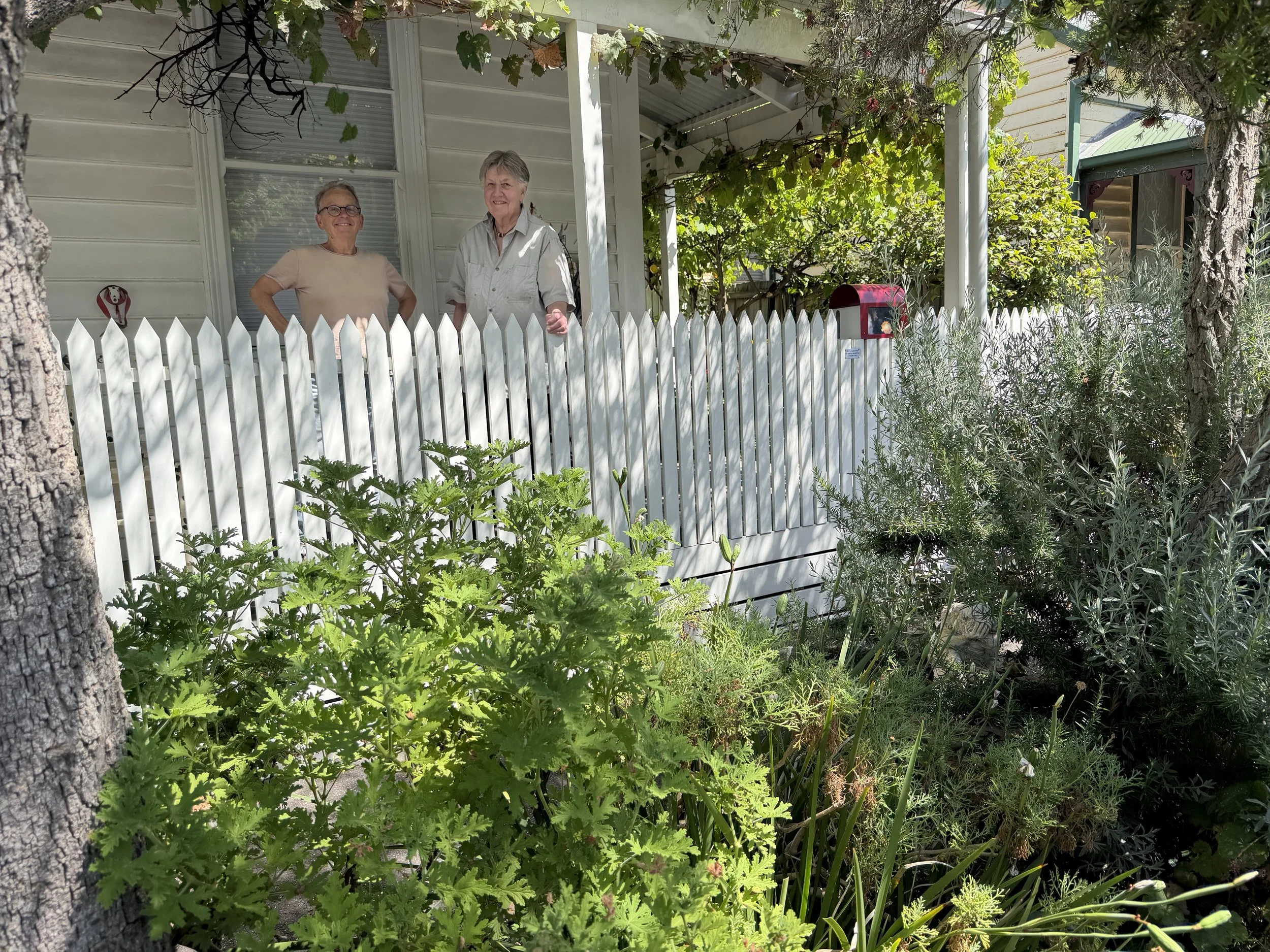
Legends in the world of children’s literature and weavers of community in South Melbourne
Date of interview: 30th January 2026
Images: Ann James, Ann Haddon and Emma Cutting
How did your street garden begin?
When we bought, renovated and lived in our house in the late 1980/90’s we had little time for considering the small square of bare soil around one tree planted by the council. When we moved back in 2017, the square was larger with two trees, and we were naïve, not realising that there were things we couldn’t do. We assumed that the nature strip was ours to do with what we liked and so we did.
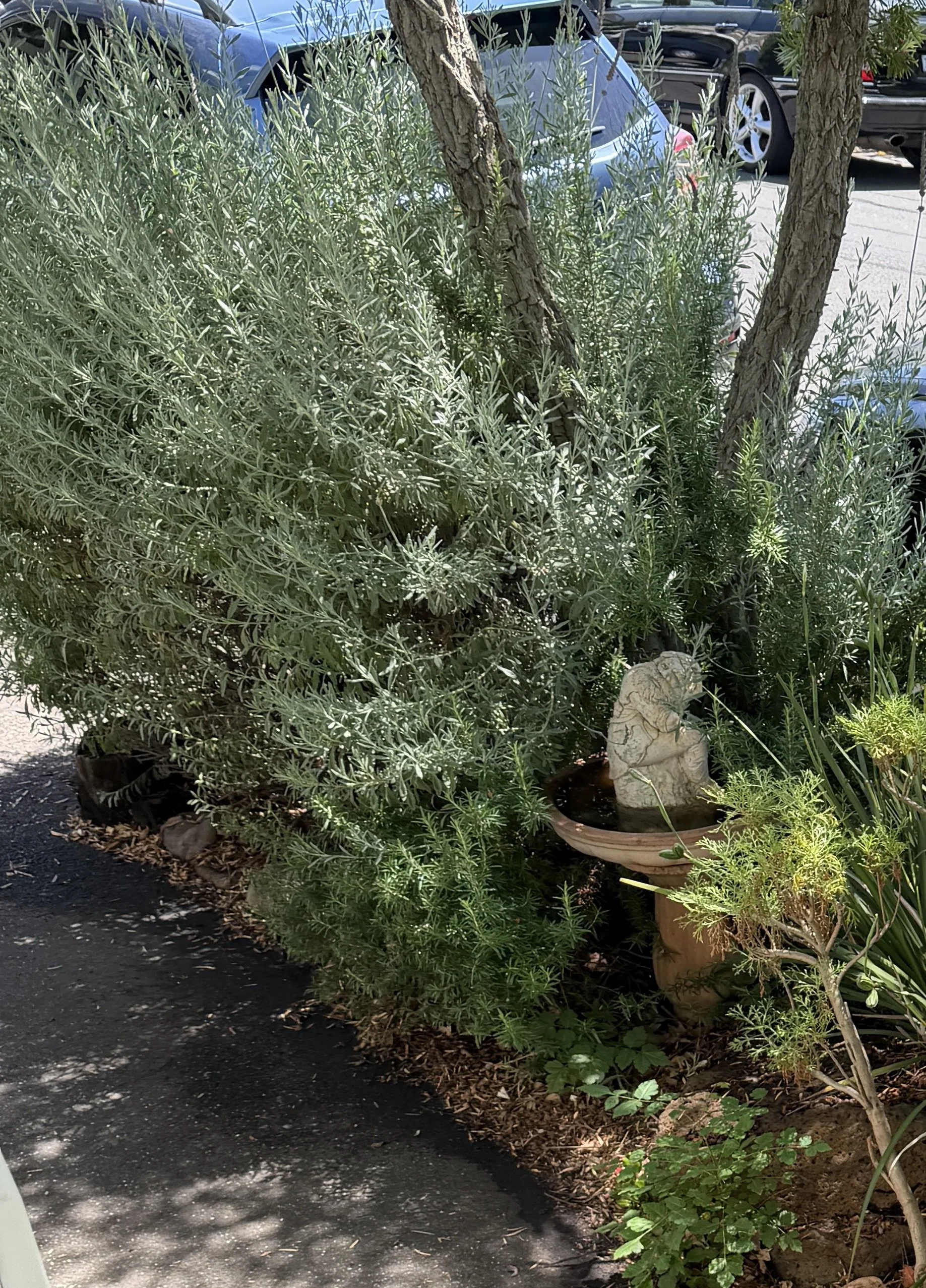
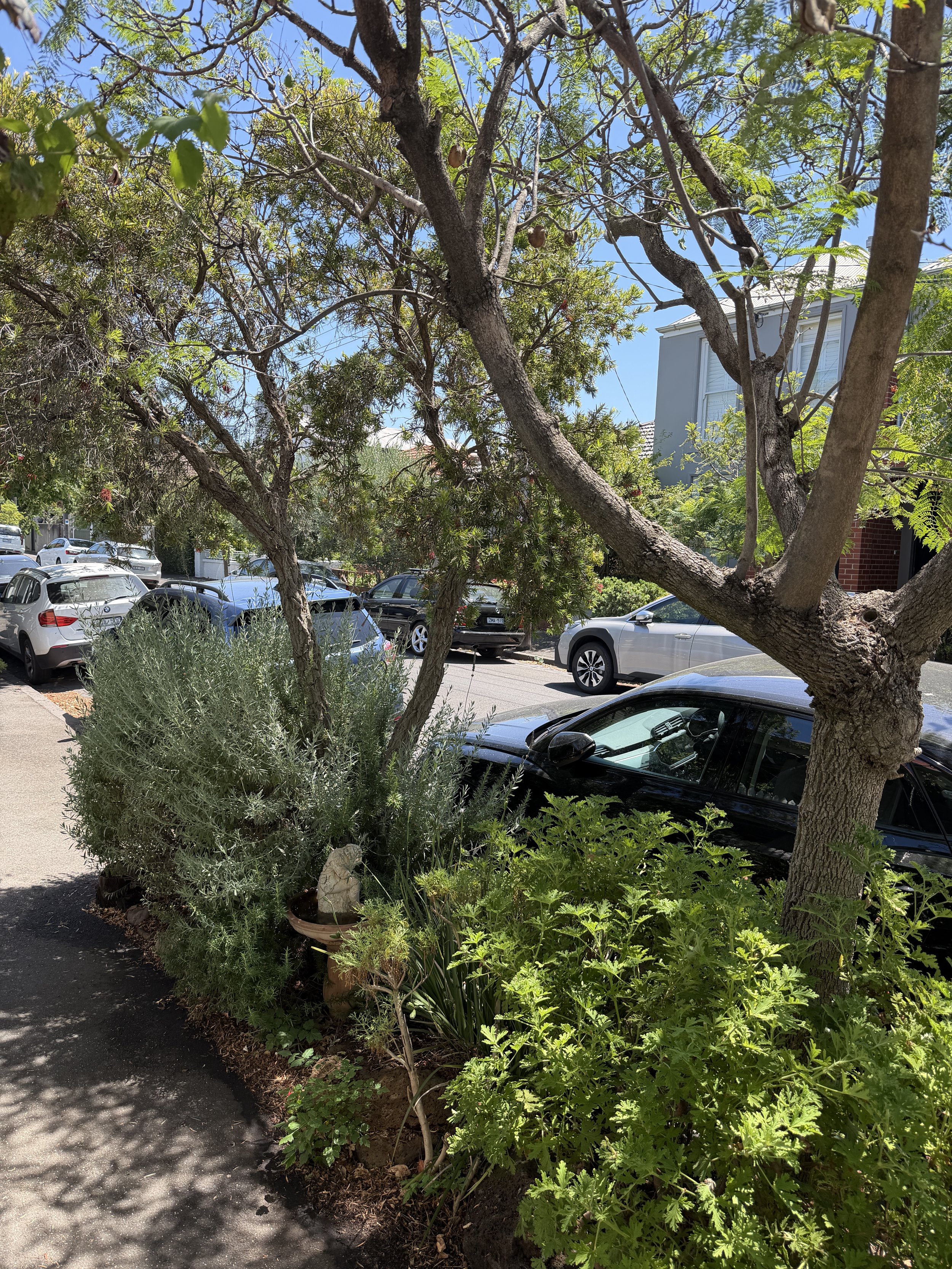
We had rocks and plants from our previous home and we chose from those. We placed three huge rocks onto the nature strip and planted lavender, red geraniums and a white daisy around them. We had a birdbath that wouldn’t fit in our back garden so we put that in too and also a gnome that looked kind of creepy from one angle...so we put that in the birdbath. It hasn’t scared anyone off yet.
Now, we feel a tad embarrassed that we didn’t think of planting natives at the time!
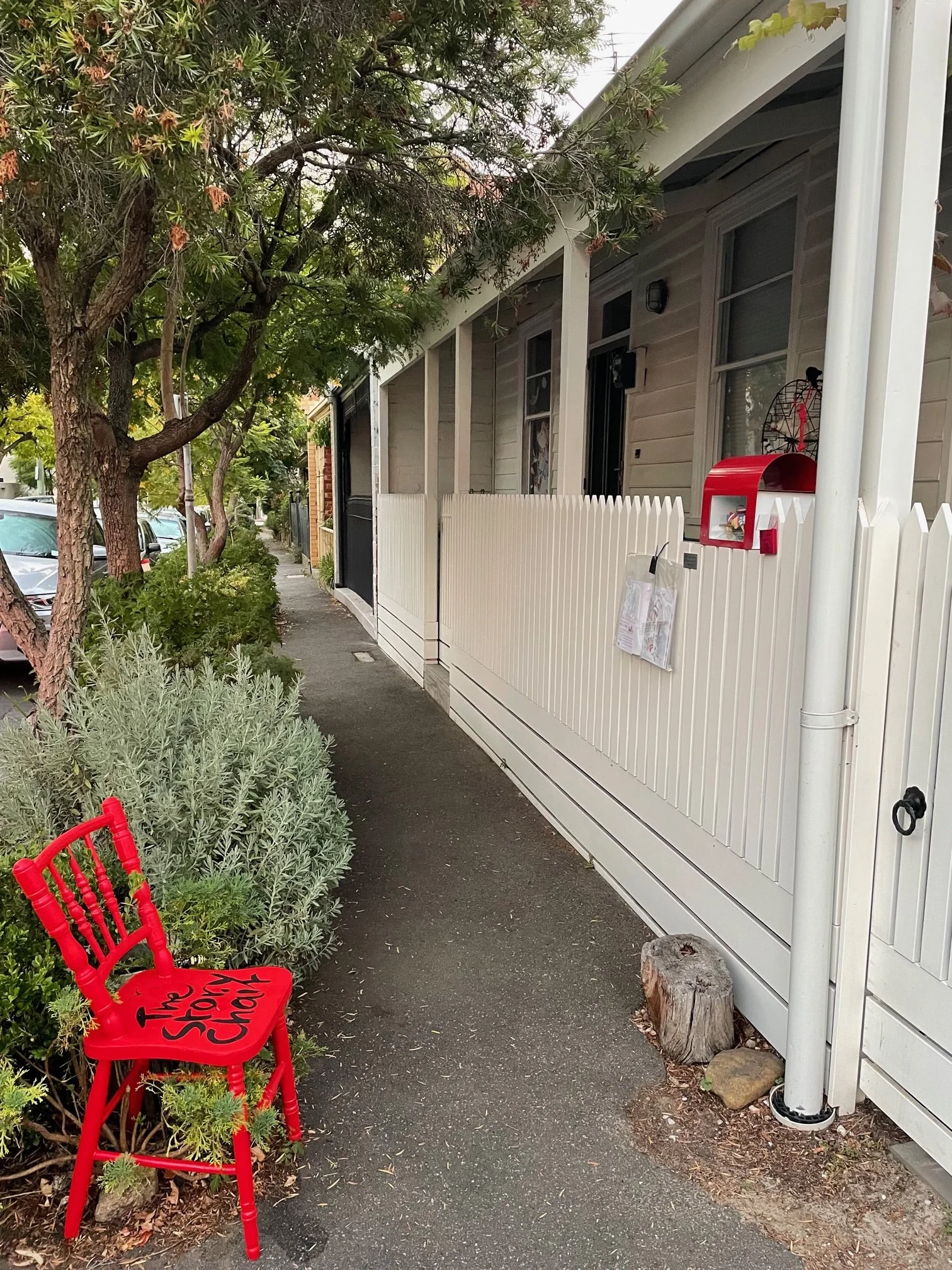
Right: Story Chair, 2022
“Places and faces - that’s what people need. ”
How has your nature strip changed since you started?
It’s grown - a lot!
When we moved back in 2017, there was a 3 metre cut out in the asphalt with 2 sick-looking council trees and lots of weeds.
The garden we created has, in fact, made the trees much healthier - we keep sweeping the leaves that drop on to the path under the trees and giving them mulch! In general, many things have changed over the past 40 years...
40 years ago a typical house would have a front fence, and maybe a garden and in the back, the lawn, a hills hoist clothesline and a few fruit trees. Back then nature strips were just part of the roads - they were what they were and nothing more. There wasn’t a lot of action happening beyond our fences.
But with buildings and paving taking over people’s properties and less chances for people to connect to their community, there is a lot more awareness and interest in what can happen with this land. Many people want to see the nature strips as an extension of their property and like to take responsibility for it. People are perhaps waking up to this call to connect to outside and nature. There is an innate need to belong to, even care for something that isn’t owned by us - perhaps it makes us feel less alone.
Heartscapes and their work has also added a big change to our street nature strips.
We feel people now, more than ever, are craving connection to people, face to face. Places and faces – that’s what people need…and a sense of community. And it’s not available as much anymore. We need to see different places and faces - we need to bump into new stuff and new people.
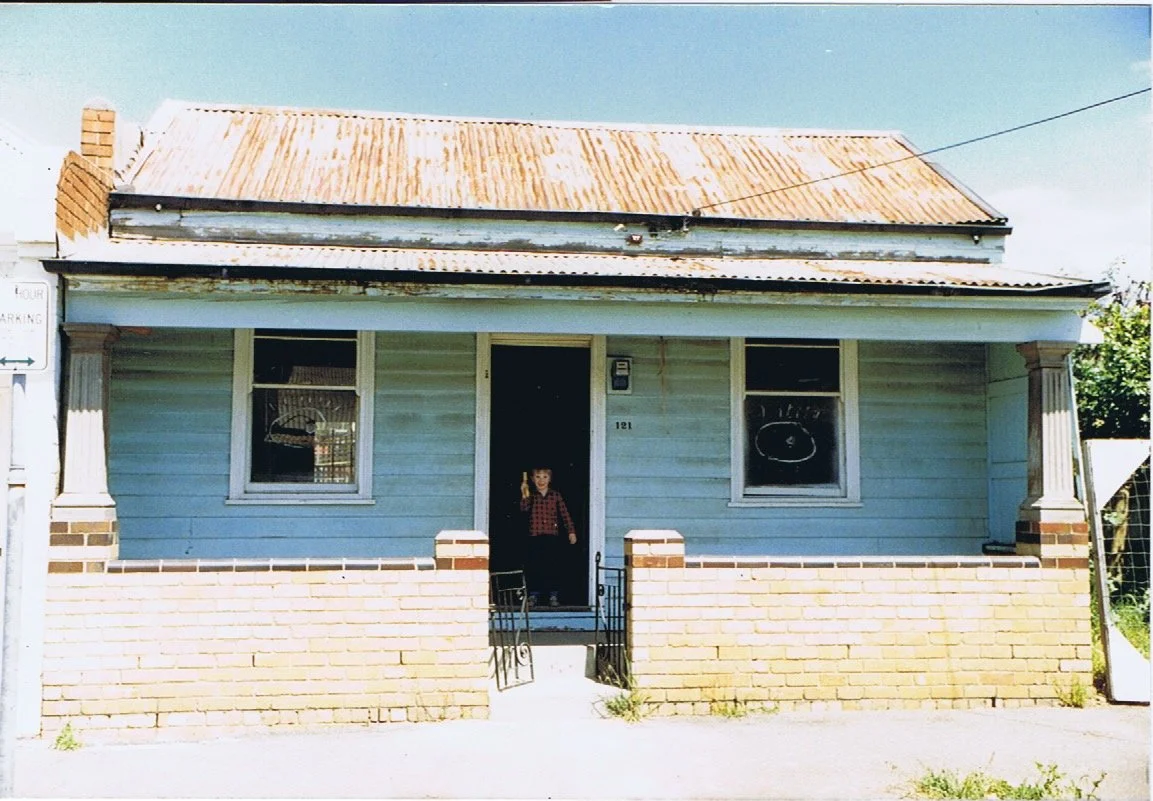
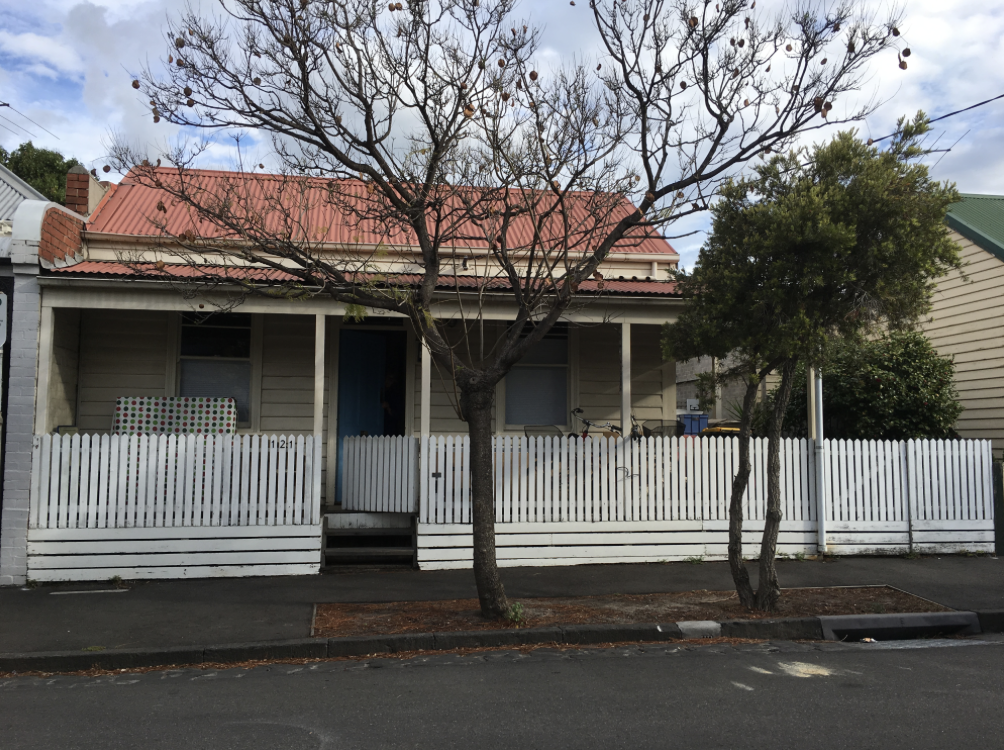
Above top: Original house photo, 1987
Above: House in 2018
“The garden has given us the opportunity to share our sense of humour, share a part of ourselves and be a part of the street.”
What has your street garden given you?
It has given us the opportunity to share our sense of humour, share a part of ourselves and be a part of the street.
We like how people understand that the gardens have the personality of the people who created them.
The gardens on our street (there are many others) soften the edges and are a neighbourly addition to the road.
We like to talk to people about the garden because it is something you can chat about without embarrassment and it is a positive topic of conversation, not like complaining about a lamp post or a pothole. People can get cranky if you are talking about things in no-man’s land but this is more positive. The no-man’s land is now everyone’s land.
There is a sense of ownership, responsibility and care for the area. And we sort of all share the footpaths.
An earlier version of Ann and Ann’s street garden can be seen on the Gardening Australia story A Buzz About Town that was made on our community’s work in 2021!
Right: The gnome has found its home in the birdbath, 2026